
Did you love your first year in Australia and does the idea of returning to Belgium seem impossible? Good news: the Australian government gives you the opportunity to apply for a 2nd Working Holiday Visa in Australia (and even a 3rd for the most passionate and hardworking )!
This second Working Holiday Visa allows you to stay in the country for an additional 12 months , continuing to work, travel, and fully experience Australian life. But be aware: to be eligible, certain specific conditions must be met. These include the requirement of 88 days of specific work in eligible regions and sectors.
In this article, we explain everything you need to know to obtain your 2nd Working Holiday Visa in Australia : the criteria, the evidence to keep and the right reflexes to put all the chances on your side.
The second Working Holiday Visa (WHV) in Australia is a valuable option for extending your stay after the first year. Specifically, this visa allows you to stay an additional 12 months in Australia, while retaining the associated rights: working for one or more employers, traveling freely within the country, and taking English language courses.
As a Belgian citizen, this program offers you the opportunity to extend an adventure you've already begun. It gives you time to explore more of Australia, deepen a professional or personal experience, and enhance your international CV. However, be aware that it's not simply a matter of "staying longer." You must have fulfilled the requirements of the initial visa (specific work status, age, etc.) to proceed to this second stage.
You cannot automatically extend your stay. To obtain a second Working Holiday Visa in Australia , you must submit a new visa application on the official Australian immigration website ( immi.homeaffairs.gov.au ) and meet several official criteria .
Belgium is one of the signatory countries of the Working Holiday Visa agreement (subclass 417) . This visa is open to young people aged 18 to 30 inclusive at the time of application. Note: the age limit remains 30 for Belgians, compared to 35 for French citizens.
This remains the most important condition: you must have at least three months of work experience in sectors and regions recognized by the Australian government . This work must be completed during your first Working Holiday Visa , in designated regional (rural areas or areas far from major cities).
As with the first visa, people with a dependent child cannot apply for an Australian Working Holiday Visa.
The Australian government strongly recommends having health insurance coverage for medical care, hospitalization, and repatriation . For Belgians, this insurance is essential , as there is no bilateral health insurance agreement with Belgium.

WHV Travel Zen insurance is recognized and accepted at customs. Learn more about this insurance!
You must be able to prove that you have at least 5,000 AUD in your account, plus enough to purchase or justify a return ticket. These funds demonstrate that you can support yourself at the start of your stay.
Your first Working Holiday Visa must have been obtained without any immigration violations (no overstaying, illegal employment, etc.). An application may be refused if the ministry detects an irregularity.
To obtain your second Working Holiday Visa in Australia , you must prove that you have completed 88 days of specific work in an eligible region defined by the Department of Home Affairs . These areas, called regional areas , cover the majority of the country, with the exception of major cities such as Sydney , Melbourne , Brisbane , Perth , and Canberra .
The objective of this program is to encourage young people on Working Holiday Visas to contribute to the economic and agricultural development of rural or isolated regions, which often lack manpower.
By working in these areas, you directly help farms, local businesses, and the tourism sector to continue operating. It's also an opportunity to experience a more authentic side of Australia , far from the major cities.
Certain Australian regions are fully recognized as regional areas:
These areas offer numerous opportunities in agriculture, catering, construction, and rural tourism.
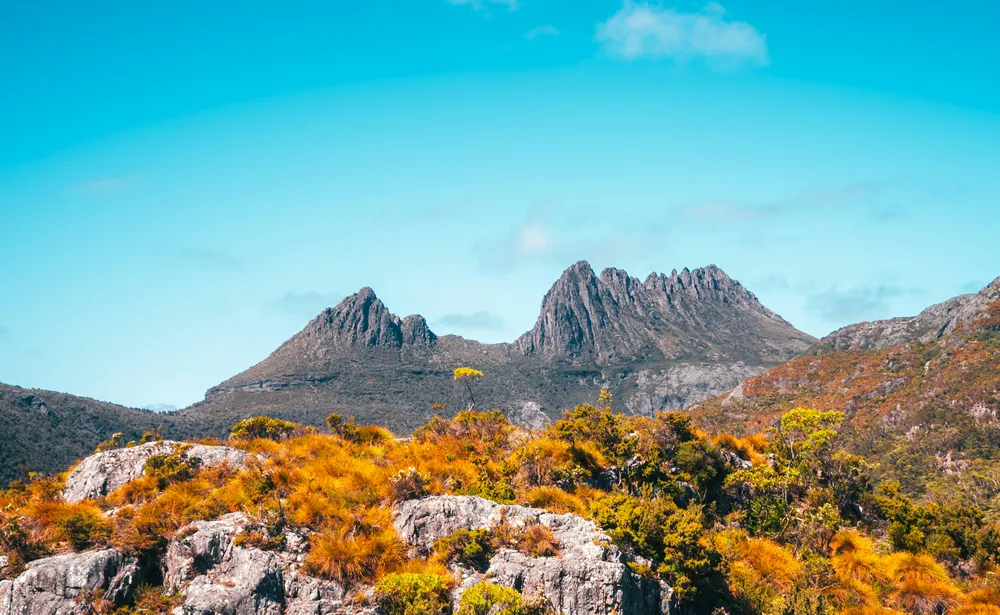
Other states are mixed : only certain parts are recognized as regional. Here are some examples:
Before accepting a job, always check the postcode of the workplace on the Australian government list https://immi.homeaffairs.gov.au/ (section specified work and regional areas ).
Simply enter the postal code of your future employer to find out immediately if the area counts towards your 2nd visa.
Tip: Keep a copy of the eligible postcode and region name in your documents; this will be useful when you make your official application.
If your goal is to obtain your second Working Holiday Visa in Australia , plan your travel accordingly:
To obtain a 2nd Working Holiday Visa in Australia , it is not enough to extend your stay: you must prove that you have completed at least 88 days of “specified work” , that is to say, specific work recognized by the Australian government , in an eligible regional area .
These jobs are listed by the Department of Home Affairs and are intended to support sectors that are experiencing labor shortages in rural or remote areas of the country.
Official source: Australian Government – Home Affairs: Specified Work
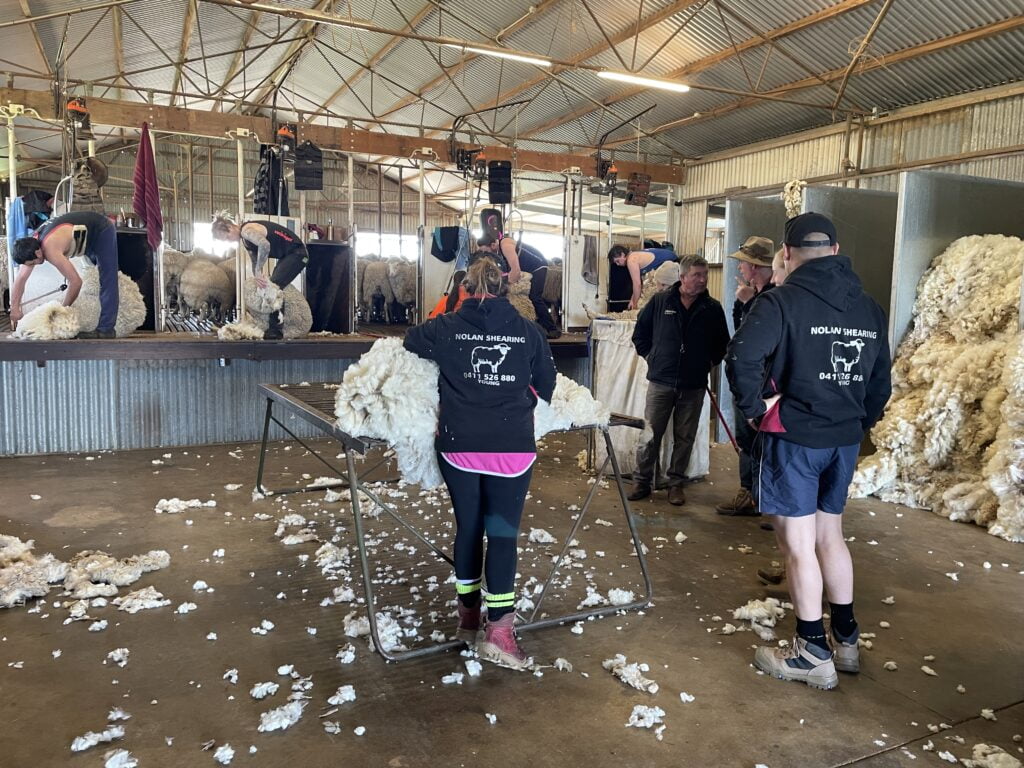
This is the most popular sector for Belgian and French Working Holiday Visa holders wishing to complete their 88 days. It includes all activities related to farming or livestock breeding:
These jobs are present in most regional states: Queensland, South Australia, Tasmania and Northern Territory .
Make sure your employer has a valid ABN (Australian Business Number) and that your pay meets the legal minimum set by the Fair Work Commission.
Another sector recognized by the government is construction. The jobs involved include:
These jobs are particularly sought after in the Northern Territory , Queensland , and parts of Western Australia . They often offer good pay and allow you to complete your 88 days of work while gaining valuable work experience.
Reference: “Building and Construction General On-site Award 2020”, Fair Work Ombudsman.
Jobs related to the environment and extraction are also part of specified work . They include:
These positions are less frequent but often better paid. They are offered mainly in remote areas of Western Australia , Queensland and the Northern Territory .
Since 2019, you can count certain jobs in the tourism and hospitality sector towards your second visa , provided they are carried out in designated regions in the north of the country , above the Tropic of Capricorn.
The positions concerned:
Examples of eligible areas include Cairns , Darwin, Broome, Port Douglas , and certain areas of the Northern Territory . Note: Major cities such as Sydney, Brisbane, Melbourne, and Perth are excluded from this rule.
The Australian government also recognizes official volunteering in disaster relief or reconstruction operations following natural disasters:
A recognized organization (such as an association, an NGO, or a municipal council) must register your missions so that they are counted in the same way as paid employment.
The requirement of 88 days of specified work is key to accessing a second Working Holiday Visa in Australia . But be aware: the calculation isn't arbitrary. The Department of Home Affairs applies precise rules that every Belgian Working Holiday Visa holder must know before starting work.
These are calendar days , not necessarily actual working days. If you work five days a week for three months, you will still accrue your 88 days, even with weekends included.
All work counts, as long as the pay meets the legal minimum. However, occasional work of one day a week will not be enough to reach the required 88 days.
You can add up your working days:
Working 12 hours does not count as two days . A workday, regardless of its length, is equivalent to a single validated day.
Only declared and paid employment in accordance with Australian law is taken into account. Undeclared work or work exchanges are not eligible, except within the framework of recognized humanitarian volunteering (natural disasters).
Australian immigration is very strict about supporting documents. If stopped, you must be able to prove your 88 days of stay with official documents .
Here is the list to keep from your first job:
Practical tip: scan or photograph all your documents as you go and store them in a cloud storage service. Losing documents is common after several months of road tripping.

You must ensure that your jobs comply with Australian employment legislation, including minimum wage, so that your 88 days of specific work are counted and your 2nd Australian Working Holiday Visa is validated.
As of July 1, 2025, the Australian national minimum wage is set at AUD 24.98 per hour (source: Fair Work Commission ). This rate applies to all adult workers, regardless of their visa.
Seasonal or casual contracts must include a 15% to 25% premium to compensate for the lack of paid leave. In other words, a Working Holiday Visa holder paid at the casual can earn between 28 and 31 AUD per hour , depending on the sector.
In Australia, each sector of activity operates under a collective agreement called an Award (industrial award) . These agreements determine minimum wages, working hours, overtime pay for weekends or public holidays, and accommodation conditions when offered by the employer.
Some examples:
You can view your Award on the official website: https://www.fairwork.gov.au .
For your job to be validated for your second Working Holiday Visa in Australia , it must:
If immigration discovers that you have been underpaid or that your contract does not comply with the law, your days may not be counted .
Even on a working holiday visa, you have the same rights as Australians :
If you have any doubts or problems, you can contact: https://www.fairwork.gov.au or call the multilingual helpline on 13 13 94 .
Obtaining a second Working Holiday Visa in Australia means extending one of the most incredible experiences a young traveler can have. Whether you spent your first few months on a farm, a construction site, or in a hotel in the north of the country, this second year allows you to continue exploring, working, and enjoying the Australian way of life while further developing your professional experience.
The secret? Good preparation, solid evidence, and a little organization. And while the Australian bureaucracy can sometimes seem demanding, the effort is well worth it.

At VisaVacancesTravail.be , we support young Belgians at every stage of their adventure:
You can also participate in a free online information session to discover our Working Holiday Visa packages for Australia , from the Basic Package (settling in + administrative procedures) to the Plus Package (guaranteed job, eco-volunteering, half-pair...). Don't hesitate to contact us!
Cover photo: Alex King on Unsplash

Cities marked with an asterisk (*) are eligible for Job Assistance
Cities marked with an asterisk (*) are eligible for Job Assistance
Cities marked with an asterisk (*) are eligible for Job Assistance